
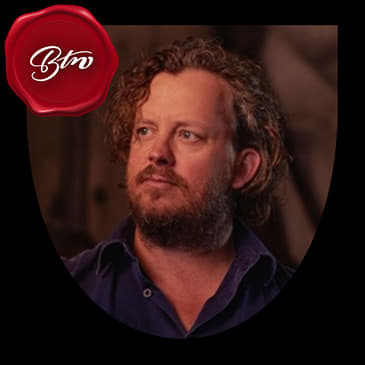
A winemaker with trophies on the shelf, Cabernet in his veins and curiosity in every bottle.
Join us today as we welcome Julian Langworthy from Deep Woods Estate.
Julian is regarded as one of the most talented winemakers in Australia with awards such as James Halliday's Winemaker of the Year, a Jimmy Watson Trophy winner, Ray Jordan's Winemaker of the Year, and a Wine Society Young Winemaker of the Year nominee. His impressive career has included vintages in France and Canada, as well as senior winemaking roles in the Barossa Valley, Clare Valley and Coonawarra.
Passionate about producing regionally distinctive wines, Julian joined the Deep Woods team in 2011. Under his leadership, the winemaking team has continued to refine and explore the Deep Woods style, culminating in more than 60 trophies and 200 gold medals awarded across major national and international wine shows.
[00:00:08] Welcome to Behind the Wines, a freshly bottled podcast about Australian wine, the wines we love and the people behind them. My mission is simple. I want to get down into the cellar with sommeliers, stomp some grapes with winemakers and have chats with our finest critics, growers, retailers and chefs. Today's guest Julian Langworthy is one of Australia's most awarded and respected winemakers.
[00:00:36] From completing vintages in France and Canada to leading one of Margaret River's most celebrated wineries, he's built a reputation for crafting exceptional wines while never losing his curiosity to experiment. As Chief Winemaker at Deep Woods Estate, he's helped earn more than 60 trophies and over 200 gold medals, all while chasing one ambitious goal, to make the world's best Cabernet Sémillon. Julian, welcome to Behind the Wines.
[00:01:14] Julian, thank you very much Brent, excited to be on. You grew up in Margaret River before it became the global wine destination it is today. What's your earliest memory of the vineyards or wine? Very pertinent question for me I guess. My father was an ornithologist and he worked for the Ag Department of Western Australia in basically working on how to get rid of birds from vineyards. So in the late 70s when we moved to Margaret River there was only a handful of wineries.
[00:01:40] Some of my earliest memories are actually trawling along behind Dad through vineyards such as Cullen and Cape Mentel and Lewin. So it was a tiny industry then, an almost backyard cottage industry. But that was how we came to move to Margaret River in the 70s. And yeah, it's a beautiful place and it bears little semblance to the region it was then perhaps. It's funny how you just mentioned those brands and it's a cottage industry and they're like icons now of Australian wine.
[00:02:07] No, very true. And pioneers in Margaret River such as those sort of brands and places like Woodlands and a few others, you know, they must have had a really great passion because it would have been tough at those days. And the reason Dad was employed to go down there was because birds were just smashing everything at that juncture. The course of his five year research project about grapevine pests and stuff in Margaret River were basically there was a lot more vineyards planted and the birds became much less of a problem.
[00:02:33] And they tried all kinds of crazy things, you know, like the Peregrine Falcon on the Vast Felix label. You know, that was some of the trial work they did about Peregrine Falcons, like chasing birds out of the vineyards. But it was an explosion of new and cool vineyards have gone in over the period. And then it's a very multicultural, exciting kind of place to live these days. So you mentioned that your dad working there trying to get rid of all these pests, but do you always think then that wine was in your future or did you think it just snuck up to you?
[00:03:02] It never ever occurred to me. Sometimes when something's right in front of you, it doesn't really seem like something you would sort of pursue. I was going to become a chef and then I was definitely going to be a marine biologist. I went to University of West Australia and studied marine biology. And after two years of mainly drinking and playing football, it seemed fair on the fishes that I should do something else. And I went back home, did a harvest to save some money to drive around Australia.
[00:03:28] And when I returned, basically, I enjoyed it so much. And it was such a real passionate organic kind of industry. I was like, well, this is what I want to do. And I transferred over to Adelaide University and studied ornithology there. Yeah. It was a bit of a difference. Yeah. So that's interesting. It nearly became a marine biologist. You nearly like the George Costanza of the wine industry. I wasn't going to suggest that, but yeah, it's a good example. I hadn't thought of that at all.
[00:03:58] You've made wine in France, Canada, the Clare Valley, Barossa and Kunawara. Looking back, which region taught you the lesson that still shapes your winemaking today? I think it's always an amalgam of all your experience in these things. Probably the most formative time I spent was my probably five years at Wins in Kunawara. Sue Hodder, who's still at Wins today, was an amazing boss. Very empowering and very motivational for a young winemaker as I was then.
[00:04:28] And probably I learned a lot about making Cabernet, but probably learned more about leading teams and fostering good culture, which in any workplace is super important and particularly so in wineries. And you know, the terra is quite different in all those places. I guess, did that give you like a technical advantage, sort of looking how you can approach wine? To a certain degree. Like winemakers, I think you need to have a certain tenure in an area or even with a vineyard. Like five years in wine is not a long time.
[00:04:56] Vineyards grow slowly, wine programs evolve slowly. So my history and my background from around the world and interstate was really important, but then you've got to get to grips with what you're doing in your own soil. So I've been 16 and a half years at Deepwoods now, and it's been an amazing journey. And I can't believe it's been that long gone by in a heartbeat, but it's, I came to Deepwoods with a passion for wine and, and I really knew what I wanted to achieve. And that was to make the world's greatest wines.
[00:05:23] And I strongly believe Marga River is the place within Australia that we can actually do that. So you returned home to Marga River, as you said, in 2011, I believe. Yep. What was it that excited you about joining Deepwood Estate? Well, it's interesting. It was, I guess it was a sort of a relatively unknown winery at that juncture. I first visited, I was the head winemaker at Knappstein in the Clare Valley at that stage. Really quite young head winemaker, especially within a company like Lion Nathan that owned it then.
[00:05:51] But the desire to move home was quite strong. And I'd been gone for sort of 10 years by that stage. And I visited the, the owner Peter Fogarty rang me up about coming to interview for this job. And I ended up visiting and I tried these beautiful cabinets at a barrel that were sort of unformed, you know, like there was, they had this inherent texture and grace to them, but they probably just weren't framed as well as they could be in my eyes. And, and there was lots of blue sky. And so Deepwood seemed like the perfect example.
[00:06:20] You know, I was a really passionate young winemaker with lots of plans and ideas and Deepwood's wasn't really resolved on a complete purpose at that stage, I guess, being quite a young brand itself. So we sort of grew up together a bit, if that makes sense. Yeah, it does. And you often said your life in wine has been a life in Cabernet. What is it about Cabernet Sauvignon that continues to fascinate you? I remember another story as a kid.
[00:06:45] My dad was a member of a food and wine society in Margariva that was sort of David Honan of Cape Mantel fame, sort of organized most of it. This is a vague recollection of that, but one of the tastings at his house and there was a bowl of Grange on the table, you know, being a good Margariva boy, I knew inherently that Cabernet is the greatest grape. And I was looking at this, but I knew that Grange was Australia's most famous wine. And I was looking at the bottle going says Shiraz on there. That doesn't make any sense whatsoever.
[00:07:14] And Cabernet has always been part of my life, but I find it the most complex, the most compelling, possibly the hardest thing to get right. Like Chardonnay is a bit of a chameleon and different winemakers can do all sorts of different things with Cabernet. So you need brilliantly beautiful sights and then you need not to mess it up. You need to frame it in a way that's sympathetic to that vineyard and what you're trying to achieve, but not try and over-adorn it, not try and mess with it too much because it doesn't work.
[00:07:42] You have a very bold ambition to make the world's best Cabernet. What does a world-class Cabernet actually look like in your mind? World-class any sorts of wine are all about balance and interest and complexity and intrigue. The mystery of wine is so great and the mystery of Cabernet is the greatest. They should be, to mine, beautifully silky and medium-bodied, expressive. Great wines have tannin, but that doesn't mean that they're hard or chewy or green.
[00:08:11] And they can have great presence, but still be very balanced in the palate. But the lovely thing about Cabernet is, in modern Cabernet, they can be really lovely approachable wines in their youth, but they're eminently ageable. It's an amazing time capsule to behold. So all of those different sort of pieces of Cabernet I find are really quite compelling. And I still think we're evolving every year. And I guess when you're not evolving your program and you're not embracing small changes to make things better, it's probably when you start going backwards.
[00:08:40] So it's exciting times and I think the wine's getting better year on year, especially from Margariva and hopefully from Deepwoods. For me, Cabernet is interesting because I kind of knew some of the greatest wines are Cabernet in structure. They might have blends, you know, Merlot or something added to them. However, I found sort of trends change. People went to softer wines. I was drinking more Shiraz's. And this year it's kind of, that's why I'm so glad to be talking to you is that I've gone back to my,
[00:09:06] cause I bought a lot of Cabernet and aged them and I'm going, my God, I've got to start drinking these. Absolutely. And they're 20 years old, but I'm pulling them out and they're just sensational. Awesome. And, and I think other people I'm talking to, I think there's maybe, I don't know, maybe you probably think Cabernet never went out of fashion. Well, no, it definitely did. And Ashlyn from Jackson Family Wines sort of, she said that I can't remember who she was quoting, said like Cabernet was like a little black dress. It's, it's always refined. It's always there.
[00:09:36] Fashion's come and go, but it's always there. And I guess you could really relate to that. Oh, absolutely. Look, it's the world's most widely planted grape variety for a reason. It's in inherently excellent. I guess some of the problems with Cabernet in recent times, in terms of, you know, some changes in fashion have been that in the nineties and maybe early two thousands, people were trying to make quite monolithic mega oaky extracted kind of wines.
[00:10:04] And you can do that with Cabernet can add lots and lots of oak. You can get lots out of those tiny, beautiful berries if you really want to. But for me, making Cabernet is more like an exercise in restraint, just with great power comes great responsibility. You know what I mean? Just because you can make them tannic and black doesn't mean you should. So I think we have had a shift to the left a little bit in Cabernet styles recently in Australia. And I think that's bringing it back to a much broader church of people that are looking for more medium bodied wines.
[00:10:33] But that said, I think these more medium bodied Cabernets still age equally as well as the blockbusters that were sort of more popular styles in the nineties. So Deepwoods has become one of Australia's most awarded wineries under your leadership. How do you balance consistency with wanting to improve? Good question. I think the lovely thing about wine is every year you have an opportunity to reborn. Every season is different. It's an amazing career winemaking.
[00:11:02] Like I grew these grapes with a great team and then come to places like the MCG to chat about them to people that are really interested in it. It's bizarre, really. So consistency is in the vineyards, but we're trying to be consistently better every year. Like, you know, if you're a brewer, you make a recipe up and you stick to it, right? In wine, every year we're trying to make it better. Now, obviously stylistically, you're trying to keep on the same path, but you want every year to be better.
[00:11:28] So as long as you're consistently improving or consistently doing the best with what you've got, I think that's kind of the beauty of wine. And people understand that there is vintage variation and there's variations for all sorts of degrees. And that's what makes it exciting in a way. Awards are a wonderful recognition, but is there one bottle that you've made that means more than all the trophies? It's a very good question. There's probably one bottle that also won the most trophies, which is one of the most exciting.
[00:11:56] And it's sort of, Deepwood's was hugely successful and is hugely successful on the show circuit. But we won the Jimmy Watson trophy here at the Melbourne Wine Show in 2016, the 2014 Deepwood's Reserve Cabernet. And I felt so strongly about that wine. It was, I'd been at Deepwood sort of four years and I really felt we were getting to grips with what we needed to achieve and what we needed to do to make the wines absolutely epic. It was still a time that was a bit of us and them.
[00:12:23] Then there was the establishment wineries in Mugger River, the really famous ones, and then everybody else. And it sort of broke a bit of a glass ceiling for Deepwood's in that sort of space as well. So I loved the wine. It was lovely to have such great third party endorsement and what an amazing trophy the Jimmy Watson trophy is. And it did change Deepwood's trajectory as a brand a little bit too, I think. So that one from a Deepwood's point of view and my perspective is probably my most exciting and treasured kind of wine.
[00:12:52] Hopefully I haven't made the best Deepwood's wines yet. So I'll have a different answer the next time. Well, that should really be the answer for all winemakers. You haven't made your best one yet. Exactly. Every vintage throws something unexpected at you. Has there been a year when you thought, you know, mate, this is impossible, but it ended up producing something extraordinary?
[00:13:14] Even just recently, 2021, we had a huge cyclone come down the coast and dropped a monstrous amount of rain on Mugger River in early February. And, you know, Mugger River is the most consistent grape growing region in Australia. The very famous West Australian Jack Mann said Mugger River is the only region in the world that can have 100 grape vintages out of 100. But this 21 season was tricky.
[00:13:37] And we picked one batch of grapes before the rain, just one batch of Chardonnay, and then had to struggle through the rest of the harvest. The reds dried out. It ended up being quite good. It's a light vintage without huge longevity, maybe, to the wines. But this one wine, this Chardonnay we made from this one batch was ripe enough before the cyclone, plus a couple of its friends that sort of got through it okay, went on to win, you know, the national wine show for best Chardonnay in Australia. All kinds of things. People loved it.
[00:14:04] It was much kind of more acidic and tightly wound than the Chardonnays we usually make, but it just resonated. And it was just like one of those diamonds we sort of picked out of the rough in what was probably my most challenging season in Mugger River I've had. Yeah, surely that must be rewarding thinking when you've got all these challenges that, you know, you can create something that maybe was a little different than your first thought. Exactly. And it's the beauty of winemaking and grape growing. Would I have picked that vineyard then without a cyclone? No, not at all.
[00:14:32] But it worked out beautifully in that instance. You've also launched Good Tycoons, which is almost the opposite of classic fine wine. Absolutely. Is experimenting important because it keeps your creativity alive? Yeah, I think so. Love the Goon Tycoons wines are irreverent. They're definitely a bit left of centre. Like Deepwoods is about great sights in Mugger River in a contemporary form that best showcase the variety in the region. Goon Tycoons is about fun.
[00:15:00] It's about joyful wines to drink. It's about different techniques, different grape varieties. Make skin contact Riesling, Nero de Avala. We use amphoras rather than barrels. It's just a lot of fun. And I think keeping it fresh and keeping it cool is always a great option. I know your quest for the perfect Cabernet, but if you had unlimited freedom, no commercial pressure, is there a wine that you've always wanted to make? I'm very lucky in the fact that I'm kind of making the wine I've always wanted to make.
[00:15:30] If I had a choice to work anywhere in the world to make what would hopefully be the world's best wines, it would be in Mugger River. So I'm kind of living that dream, which is a pretty nice place to be, I guess. Yeah, well, having been to Mugger River numerous times, yeah, it's got a lot going for it. It does, and direct flights from Melbourne these days. Yeah, you can go to Busselton. Busselton, yeah. So, which is not too far away. Winemaking is often romanticized. What's something people would be surprised to learn about what actually happens during vintage?
[00:16:00] Well, that's a good question. Well, the hours are pretty extreme. I'm pretty easy, well over 90 hours a week to 100 hours a week all harvest. It's just because you've only got one chance to get it right each year. I think we do a lot of cleaning. Sometimes, especially junior winemakers, possibly not me anymore, but as a junior winemaker I was pretty much a glorified cleaner. What are you going to do? I'm going to clean these fittings and then I'm going to clean this tank and then I'm going to clean that pump and then I'm going to clean that line
[00:16:28] and then I'm going to go get some more cleaning done before I do anything in the winery. It's just not really the glamorous side of what you think about winemaking perhaps. That image kind of puts me, I don't know if you've ever seen the show The Bear, the restaurant show, where he has to clean the forks and he just had to clean the forks to clean the forks before he could move on to the next stage. So, yeah, there must be something in doing something properly. So after everything you've achieved, what still gets you excited about walking into the winery every morning?
[00:16:56] Oh, there's great energy in wineries. Like they are fun places to work. We're getting a really cool natural product. Every year we get interns in from all around the world, which keeps it bright and fresh. And there is that whole piece about Hope Springs Eternal each year. We're going to make the best wine ever. We're excited about these blends. So I think that sort of quest, every job's got its ups and downs. It's just gone through budgets. I hate budgeting. Much better off being a winemaker and coming to chat to people at the MCC, for example.
[00:17:26] But every morning there's a great team working together for a common goal, which is a lovely place to work. So every morning is exciting at Deepwoods. And every year I think we're going to make the best wine there is yet to be made. So pretty easy to go to work. Yes, sounds idyllic. When people open a bottle of Deepwood Cabernet 20 years from now, what do you hope they're tasting besides great wine? Well, wines are ultimately time capsules.
[00:17:52] So it'll be a little piece of, say, our current release reserve Cabernet is a 2023, which we're trying today. 2023 was a beautiful vintage. In 20 years time, it will have mellowed slightly more, slightly the tannins become more resolved, slightly even more mouth coating and powder fine, like sort of almost like bitter cocoa powder tannins. And hopefully what they get is a great sense of satisfaction that they are sure sighted enough to buy such a cool wine, to age for such a cool time.
[00:18:22] Wines are great for special occasions, anniversaries. I love buying wines and I've been somewhere to remind you of that sort of thing. And so hopefully some of the guys here today buy a few bottles of reserve Cabernet and they open them in 20 years time. They'll get some experience like that, I guess. So Julian, we've learned about your career, your philosophy, and your pursuit of making some of Australia's finest wines. Now it's time to find out a little more about the person behind the wine. It's time for glass half full. The rules are simple. First thing that comes to mind. Are you ready? Absolutely.
[00:18:52] What's always in your fridge besides wine? Beer. Any type of beer? Cooper's Green, generally. Nice. A wine region you would like to explore? Sicily. Yeah, like the Alba. Yeah, yeah. Nero de Avila is from there. It's like mountain wines from that area seem very cool. Yeah. I haven't yet to be in the Sicily myself, but it's on the bucket list. A grape variety you think deserves more attention? Shannon Blanc. What's your guilty pleasure food with wine?
[00:19:21] Oh, pizza and Cabernet. Yeah, I love pizza and Cabernet. Homemade pizza and Cabernet on a Thursday on the couch in your undies. Perfect. If you weren't making wine tomorrow, what would you be doing? I'd probably be unemployed. Something in agriculture, some form of farming enterprise. Aquaculture, probably. What's one wine myth you'd love to retire forever?
[00:19:48] Oh, you know, you get these books about demystifying wine. The mysteries in wine that make it the greatest beverage on earth, if you know what I'm getting at. So the books. Yeah, they suck. You can't demystify wine, you just need to drink it and learn about it that way. Yeah, like 101 for dummies or something. Correct. Yeah. What's your favourite sound in a winery? No sound at all, because it means nothing's broken. You know, rolling barrels is a great sound. That's like prepping for vintage, when you're all excited about getting things going.
[00:20:18] Unloading barrels, getting them onto the cradles, sousing them, that's always quite cool. What's a bottle you've opened that's left you completely speechless? And let's maybe think of another winery or another bottle. I do. So whilst Cabernet is my first love, I would say Chardonnay is my second. And I've told people before, there's a very famous Begânian producer called Bonne de Martre. And I always say Bonne de Martre changed my life because I thought I didn't like Chardonnay until I tried that wine. It's quite a young winemaker.
[00:20:47] And yeah, it's grossly expensive these days, but I'm always very happy to say Bonne de Martre changed my life because it was an epiphany of what Chardonnay could be. So then again, it's kind of priceless. Yes, absolutely. Very true. Who's someone in wine you'd love to share a bottle with? I'm very lucky that I get to share bottles of wine with lots of people. And I've had some amazing mentors over the years.
[00:21:13] Jancis Robinson is always extremely insightful and I haven't got to share a bottle with her yet. So one of our bottles of Cabernet with her at some juncture soon would be good. What's something you've become better at outside of wine because of winemaking? Communication. You can't communicate what you're doing and how you want to do it. You can't help sell wines. And I think I've gotten better at that along the journey because it's an easy thing to talk about. One question nobody asks you, but you wish they would.
[00:21:43] Why are winemakers so good looking? Well, I'm sitting in the audience and he is certainly an attractive chap looking dapper in the finery of the long room. I've got to put a tie on. Yeah, we have spare ties. I've got one in my pocket. I'm prepared. Okay. Always prepared. Describe Margaret River in three words. Pristine, raw, powerful. And lastly, finish this sentence. Wine brings people together because?
[00:22:13] Shared connections and promotes togetherness. Julian, it's easy to see why you've become one of Australia's most respected winemakers. Your drive to keep learning, your willingness to experiment, and your unwavering belief in Margaret River Cabernet are inspiring, not just for wine lovers, but for anyone passionate about pursuing excellence. Thank you for sharing your journey, your stories and your philosophy with us. It's been an absolute pleasure having you on Behind the Wines. Thank you very much, Brent.
[00:22:42] It's been a pleasure to be on Behind the Wines. And I hope to get out there to Margaret River soon. Please do. I couldn't recommend it more highly to all of your listeners. It's an amazing place, full of amazing wines and very good looking winemakers, obviously. Not indeed. Thanks, mate. Cheers. And a special thanks goes to you, our listeners. And if you've enjoyed this episode, please subscribe to the podcast, leave a review and share with your family, friends and fellow wine lovers.
[00:23:08] And don't forget to visit our website for exclusive offers and the special wine tastings at Leroy in Bay Street Brighton for those you'll not want to miss. And as always, a big thank you to Prue, Mark and Pierre for making this podcast possible. And an acknowledgement to the traditional custodians, the land of the Wondry people, where this podcast is produced. So until next time, stay curious, drink well and keep your glass half full. Cheers.